CASE STUDY
Bridging the Digital Divide
for North Carolina Veterans
Problem
Veterans across rural North Carolina
faced major barriers to digital access, including poor broadband coverage, limited digital literacy, and high administrative hurdles, leaving many unable to access telehealth, education, or employment resources.
Solution
AMREC delivered reliable, easy-to-use hotspots and tablets directly to veterans, supported by digital skills training and hands-on assistance. The result: a trusted, low-barrier program that empowers veterans to connect with services, community, and opportunities.
Through a pioneering collaboration with the Asheville Medical Research and Education Corporation (AMREC), Mission Telecom is helping transform the lives of veterans across North Carolina. What began as a connectivity and digital inclusion challenge evolved into a far-reaching support network—delivering telehealth access, digital literacy, and reliable connectivity to veterans across 23 North Carolina counties.
Quick Facts
Customized Solutions for Digital Equity
Mission Telecom deployed hotspots
within days to ensure telehealth
continued for veterans.
Dedicated Customer Support
Partnership with Mission Telecom helped
AMREC launch a successful connectivity
program across NC.
Reliable & Affordable Connectivity
Tailored to meet specific grant
requirements and the real-world needs of
veterans, Mission Telecom delivered
customized, unlimited high-speed data
and device packages.
Strong Partnerships that Drive Impact
Mission Telecom strengthened North
Carolina’s digital equity network
by training staff, advancing digital literacy
programs, and building trusted
community relationships.
Connecting a Hard-to-Reach Veteran Population
Sarah Friedman, a program manager at U.S. Department of Veterans Affairs working through AMREC, leads an initiative supported by a grant from the North Carolina Department of IT.
The program has three core pillars:
• Telehealth station deployment
• Digital literacy education
• Device and broadband distribution
Despite the broad scope, the mission is simple: serve any veteran living in North Carolina—regardless of discharge status, with a focus on the underserved and often-overlooked westernmost regions of the state.
In many rural areas, traditional internet service is typically unavailable, unreliable, or unaffordable. Also, many veterans lacked the digital skills or confidence to access essential services like healthcare, online education, or workforce development tools. And while federal programs like the Affordable Connectivity Program (ACP) offered some relief, its eventual phase-out left a major gap.


Education & Empowerment:
Digital Literacy as a Foundation
Veterans receiving equipment are invited into two skillbuilding tracks: Learn to Earn or Pass to Earn. Participants work with Friedman to identify goals, take a Northstar digital literacy assessment, and then join six- to sevenweek in-depth classes focused on computer basics: turning on a device, using a mouse, managing files, etc. One veteran, a former manufacturing plant worker, drove from a distant county to attend classes after the plant closed. Thanks to Mission Telecom’s equipment and Northstar’s curriculum, he has begun developing skills for a new career.
Another participant—a full-time caregiver who lost her job during the hurricane—used her hotspot and laptop to enroll in school. “She has had lots of starts and stops in the past, but with an internet-enabled device she can keep going because she knows she’ll have service,” says Friedman.
Digital Support that Meets People Where They Are
As the program’s first broadband provider, Mission Telecom quickly became a key partner. From the beginning, Mission Telecom’s team helped tailor a solution that fit both the grant structure and the realities on the ground. The nonprofit organization provided high-speed hotspots with unlimited data along with tablets to veterans who needed both access and devices. To date, the program has distributed 30 hotspots and 22 tablets to veterans throughout the region. Additionally, knowing that many veterans were wary of unfamiliar programs or burdensome fine print, the Mission Telecom team helped Friedman deliver excellent end-user support by establishing a direct phone line for veterans to get help, creating contracts with minimal legal language, and providing proactive account support, including check-ins and real-time troubleshooting.
Veteran-Centered Solutions, Made Possible by Partnership
“Mission Telecom is incredibly well known in North Carolina’s digital equity circles. I kept seeing their name in advocacy spaces, and now I know why,” says Friedman. “They’ve been flexible, responsive, and honest.” Whether supporting a digital navigator office hour, responding to a hurricane crisis, or empowering a caregiver to go back to school, Mission Telecom is helping to close the digital divide—not just with hardware, but with humanity.
Enabling Telehealth & Transitional Housing Support
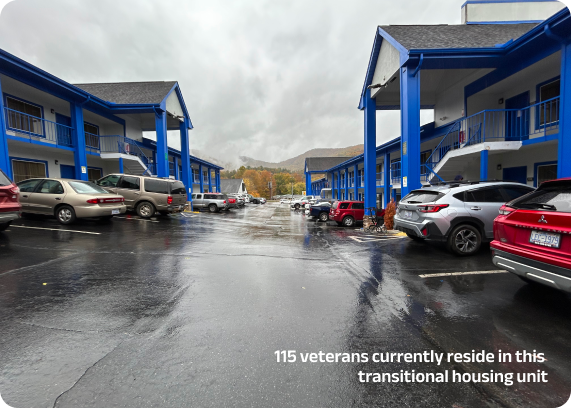
Veterans now can use Mission Telecom hotspots and evices to attend telehealth appointments and access care portals that might otherwise be out of reach. In one powerful example, Mission Telecom’s equipment came to the rescue in a transitional housing unit for male veterans after their previous facility was flooded. The new location had spotty internet despite a promised commercial line. A single Mission Telecom hotspot enabled the veteran to receive quality telehealth services while also serving as a shared connectivity option used by dozens of veterans, case workers, social workers, and administrative staff.